Follow the greatest wildlife spectacle on Earth — around 1.5 million wildebeest and 200,000 zebra moving through the Serengeti in their ancient circular migration, with year-round access from our Central Serengeti base.
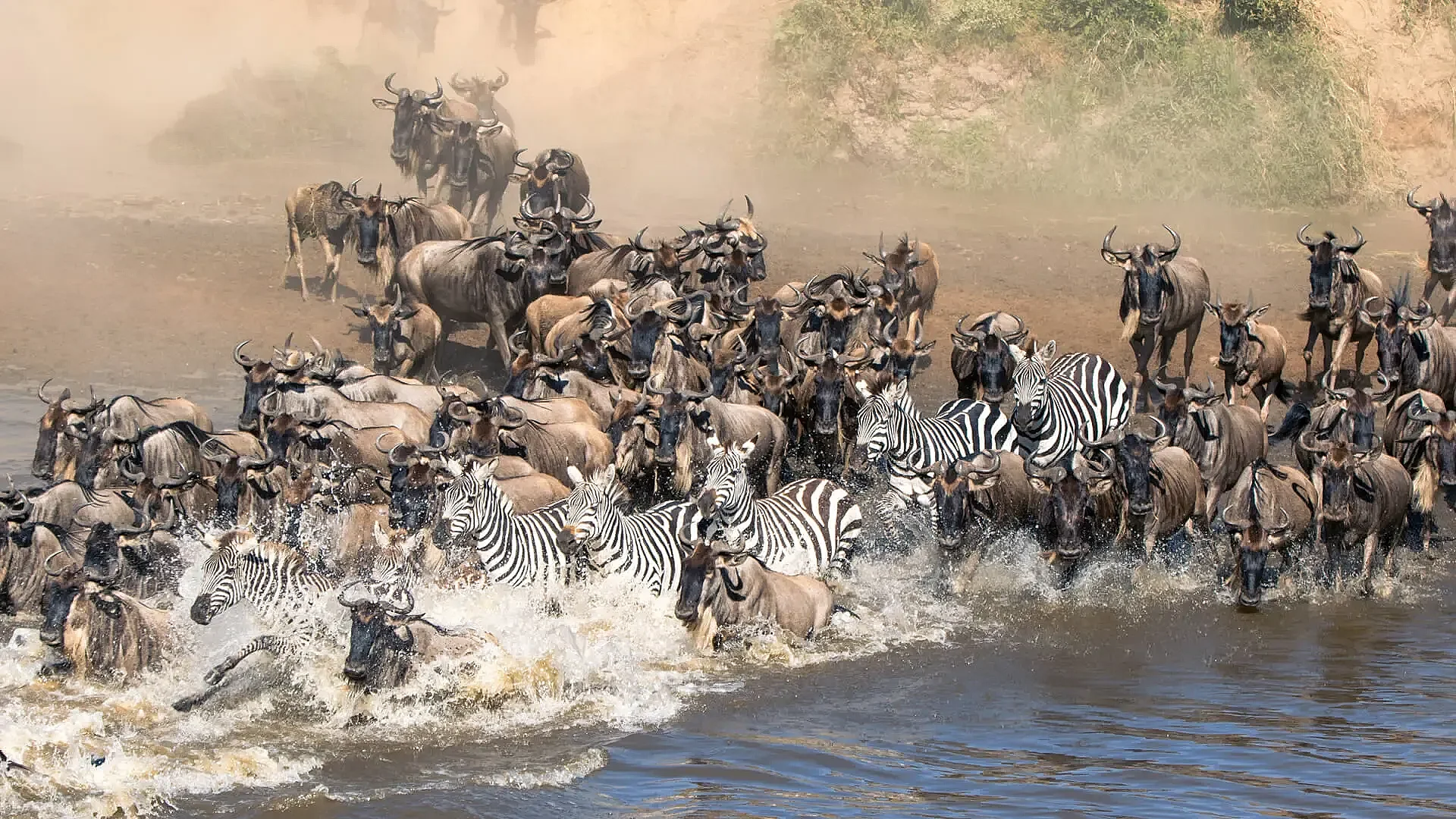
The Great Wildebeest Migration is the largest overland animal migration on the planet: roughly 1.5 million wildebeest, joined by some 200,000 zebra and large numbers of gazelle, moving in a continuous, roughly circular loop through the Serengeti-Mara ecosystem in search of fresh grazing and water. Land of Nature Camp sits in the Central Serengeti, the pivot of that loop, which gives our guests access to the migration across most of the year — not just for a few fleeting weeks.
When and where to see it
- Late January to March — Calving season. The herds gather on the southern short-grass plains, where an estimated 8,000 calves are born each day during the peak. The concentration of newborns draws lions, cheetahs, and hyenas, making for dramatic predator action.
- April to June — Northward movement. The great columns begin their march north, frequently passing through the Central Serengeti around our camp.
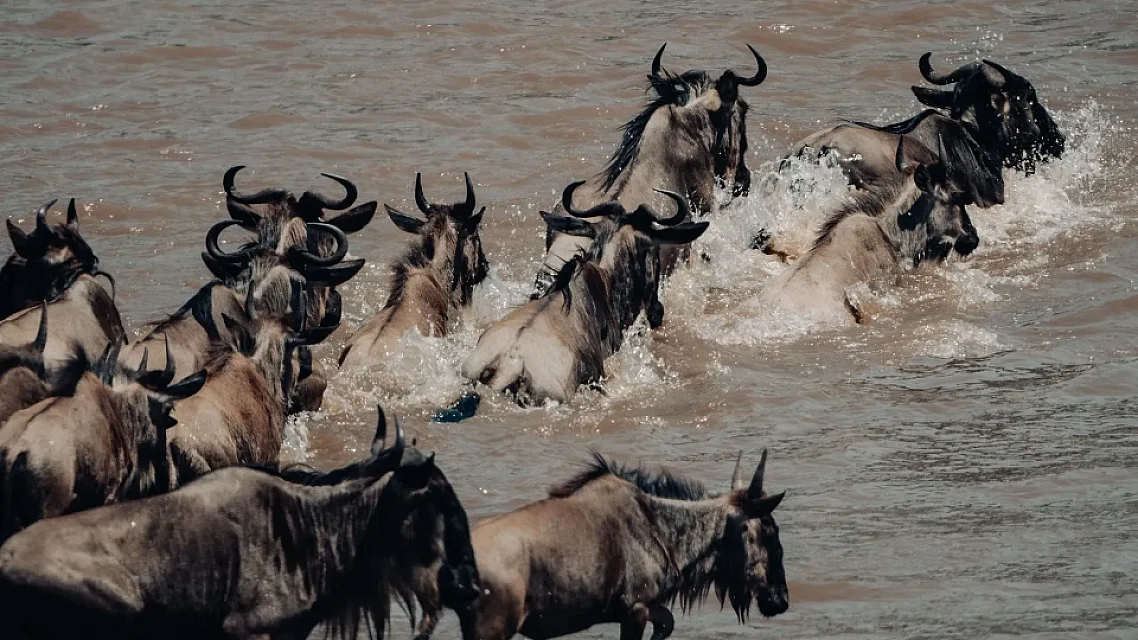
- July to October — River crossings. The herds reach the Grumeti and Mara rivers, where the famous crocodile-lined crossings take place; we reach these on a full-day safari.
- October to November — The return south. The herds turn back towards the southern plains to complete the cycle.
Because the migration is driven by rainfall, its exact timing shifts from year to year. Our guides track herd movements daily and position you for the best possible encounters, whether that means a calving-season morning on the southern plains or a heart-stopping river crossing in the north. Even outside the peak migration windows, the Central Serengeti offers some of the richest resident wildlife viewing in Africa.
Book This Experience
Get in touch to learn more or include this in your safari itinerary.